An increasing number of women are choosing to embark on an entrepreneurial journey, drawn by the idea of working for themselves and giving new meaning to their careers. According to a study carried out by OpinionWay for France Active and the French Banking Federation, to mark the International Women’s Day, 56% of women see entrepreneurship as an opportunity to give meaning to their lives, whilst 52% of them are willing to take the plunge to bring a personal idea to fruition.
The latest OpinionWay survey for France Active and the FBF reveals that the desire to start a business is growing among women, but the perception of obstacles remains strong. 24% are considering starting their own business (+3 percentage points), a figure that rises to 32% among the under 60.
What are their main motivations? 56% of women want to give meaning to their professional lives and 52% want to bring a personal idea to life. Among those under 35, it is mainly economic reasons that drive them to start a business: 34% see it as a way out of a precarious professional situation.
Against the backdrop of economic uncertainty, this survey also reveals that salaried employment is regaining ground, with 49% of women preferring to be employed (an increase of 8 percentage points compared with 2025) rather than starting their own business.
The obstacles identified by women wishing to start a business are mainly economic, psychological or administrative. For instance, one in three women feels to lack sufficient start-up capital, whilst 27% fear they will face difficulties in accessing finance.
Furthermore, one in three women is afraid of failure, and 29% underline the complexity of administrative procedures as a major obstacle to their plans.
To this end, the survey conducted by OpinionWay for France Active and the FBF highlights three measures that would help women to start their own businesses.
For 49% of women, a fairer division of domestic and family responsibilities is an essential prerequisite for encouraging entrepreneurship — a view shared by only 39% of men. This desire is accompanied by a growing demand for measures to facilitate a work-life balance, supported by 49% of female respondents (+ 4 points compared with previous surveys).
The simplification of administrative procedures is supported by 53% of French people, an increase of 5 percentage points compared with 2025. Reducing complexity would help to minimise discouragement and encourage people to take the plunge into entrepreneurship.
42% of women emphasise the need for support, mentoring and training programmes to help secure their business ventures.

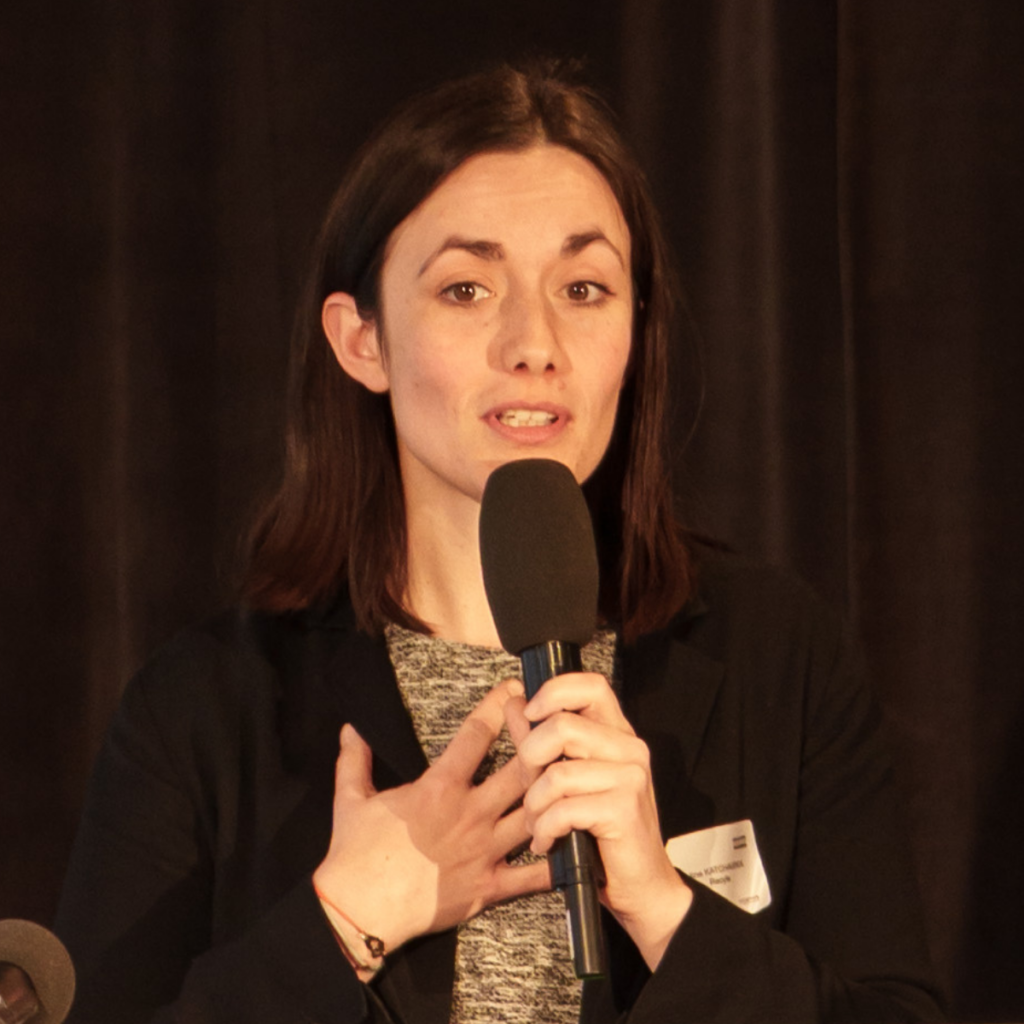
Pauline Katchavenda, founder of Recyfe, is revolutionising the recycling of joinery in France with an inclusive circular economy model. At the helm of the country’s first national network for recycling end-of-life windows, she brings together 23 social enterprises to collect, process and reintroduce materials into new production, thereby reducing CO₂ emissions by over 60% per tonne of recycled glass. Her ambition is to make the entire construction sector circular, in partnership with giants such as Saint-Gobain, whilst creating local and inclusive jobs.
With Recyfe, Pauline Katchavenda demonstrates that the circular economy can combine environmental performance with social impact. The network, supported by France Active, recycles over 90% of a window’s components, preventing landfill and promoting reuse. Its approach, which is both innovative and rooted in local communities, is inspiring a new generation of entrepreneurs committed to a more sustainable and socially responsible construction industry.
In Ance Féas, five farmers have joined forces to set up a cooperative (SCIC) dedicated to the rearing, processing and sale of pigs within an ultra-local supply chain. Their aim: to make use of 600 hectares of abandoned communal land by rearing pigs in the open air (fewer than 10 per hectare), ensuring minimal environmental impact. Faced with a lack of nearby processing facilities, they have set up a canning factory and a shop, thereby creating a 100% local supply chain.
With the support of the local council and residents, they process 100 tonnes of meat a year and create five jobs, revitalising the valley’s economy. The project, set up with the help of France Active, combines environmental sustainability, local roots and cooperative governance. The meat, reared and processed within 15 minutes of the farm, appeals to a loyal customer base, whilst the SCIC embodies a sustainable alternative to industrial models. Proof that collective and responsible farming can sustain local communities.
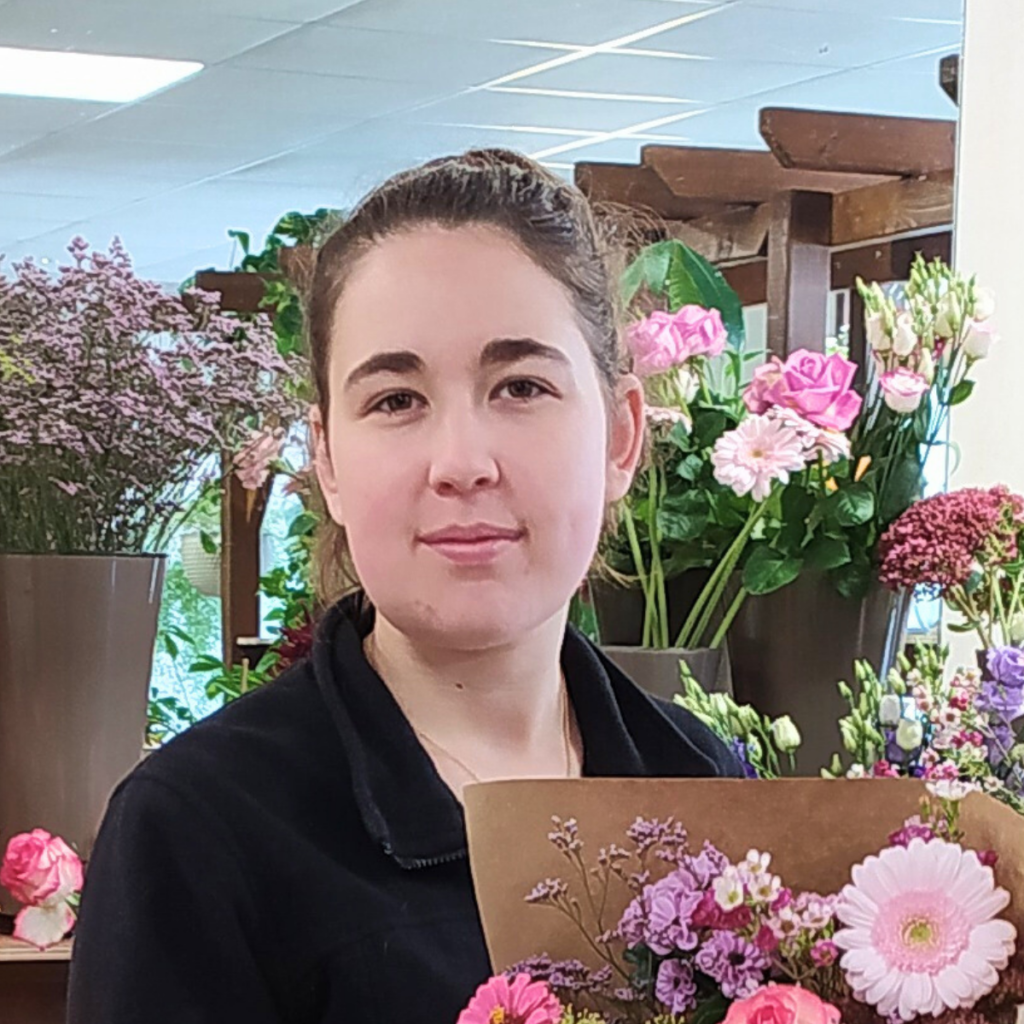
At the age of 21, Honorine Meunier has taken over the shop “La fée des Fleurs” in Secondigny, Nouvelle-Aquitaine, turning her work-study placement into a meaningful venture. Passionate about nature, she favours local, seasonal and pesticide-free flowers to promote responsible consumption: “This week, I received a delivery from a flower farm in Deux-Sèvres, located just a few kilometres from my workshop,” she tells us.
Supported by France Active, she embodies a bold, entrepreneurial spirit, combining environmental awareness with a strong local presence. Her aim is to promote conscious consumption and revitalise local life. Through local partnerships and a genuine offering, she demonstrates that young entrepreneurship goes hand in hand with sustainable innovation.